
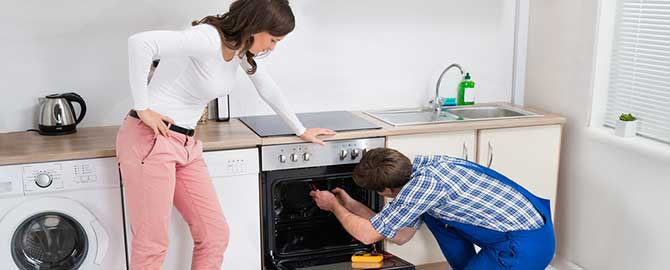
Service at the Door, Not at the Shop: Wondering About Oven Repair Services in Services?
Lubbock Appliance Repair comes to the machine instead of asking you to move it.
Contact 806-416-8642 to set up a visit at your home.
The Case for Fixing It Where It Stands: the Basics
Appliances in kitchens and laundry rooms are rarely easy to carry; the home is part of the diagnosis, and a shop cannot reproduce the home. The room around an appliance is part of what is being tested; a drain that is slow in the wall will be slow whichever machine is attached.
From the Front Door to the Finished Repair, Explained
The technician arrives, asks about the machine, and looks at it; then the work area is made safe and accessible. Care is taken with the room, because it is your home; screws and small parts are kept together so nothing goes missing.
Simple Preparation for a Home Visit: a Fuller Picture
Empty the front of the refrigerator or clear the laundry floor; pets are best kept in another room during the work. Keep the model details and a description of the fault ready; a note on when the problem began helps.
Dryers: Heat, Drum and Airflow – in Brief
A dryer that makes a thump or squeal with each turn usually has a worn roller or idler; gas dryers add an igniter and a gas valve to the list of suspects. A call about dryer repair often starts with a dryer that has gone quiet; the machine is left running properly or the options are explained.
Washers: Water In, Water Out – in Plain Terms
A washer that fails to spin may have a lid switch, a belt or a motor coupling at fault; an out-of-balance load is a common cause of loud spin cycles. Our technicians use washer repair calls to test the fill, the drain and the spin in order; the machine is run through a cycle before the visit ends.
Refrigerators: Cooling, Defrost and Seals – in Plain Terms
A unit that cycles constantly is often fighting dust on the condenser or a bad seal; a frost-covered evaporator fan cover points to a defrost fault. A visit for refrigerator repair tests the cooling path from the coil to the compartment; the cause is usually a fan, a defrost part or a seal.
Ice Maker Faults in Plain Language – Explained
An ice maker that makes nothing may have a closed water valve, a frozen fill line or a faulty switch; hard water leaves scale on the valve and the mold. Ice maker repair often begins with a simple question about the water supply; the cause is generally one valve or one switch.
The Dishwasher Section – the Short Version
A dishwasher that does not drain commonly has a blocked pump, a clogged drain hose or a garbage disposal knockout still in place; the heating element can be tested with a meter. Our technicians approach dishwasher repair by checking supply, spray and drain; the rest follows from what the tests show.
When the Disposal Hums but Will Not Turn – Explained
A noisy disposal often has something hard caught in the chamber; a hex socket on the underside lets the motor be turned by hand. The first check for garbage disposal repair is power and the reset; a stuck motor can usually be freed without a new unit.
Microwaves: Door, Control and Heat – the Short Version
A microwave that runs but does not heat may have a failed diode, a capacitor or a magnetron; the high-voltage parts hold a charge even when unplugged and are left to a technician. Our crew handles microwave repair with care because of the stored charge inside the unit; an honest opinion goes with the diagnosis.
Ovens: Igniters, Elements and Sensors – at a Glance
A burner that clicks but does not light may be dirty or have a wet igniter; the control board is tested last, not first. People call about oven repair when dinner cannot be cooked; a gas or electric supply fault is ruled out first.
Freezer Repair at Home – in Brief
A freezer that is warm may have a failed fan, a dirty coil or a thermostat problem; food loss is the real risk, so speed matters. A call for freezer repair typically comes from food that is starting to thaw; the seal is inspected along its whole length.
Questions Asked on the Phone, Explained
A good call starts with questions about the machine and the fault; the type of appliance and its brand come first. Plain words are fine, since the technician will translate; the technician fills in the technical side.
Stacked, Built-In and Tight Spaces – in Brief
Stacked laundry pairs, built-in ovens and under-counter units all need extra care; a built-in oven can slide out of its cabinet on a rail. Careful handling protects the floor, the cabinets and the machine; the area is wiped clean afterwards.
Gas, Electric and Water Connections: the Basics
Every appliance in the house is tied to one or more utility connections; a washer needs good water pressure and clear hoses. Problems in the house can look like problems in the machine; the machine can be tested right at the outlet.
Keeping Machines Healthy After the Repair – the Short Version
Regular upkeep keeps most household machines running longer; clean the lint trap after every dryer load and the vent each year. Keep the area around appliances clear and the airflow free; ask the technician for tips on your particular model.
Garages, Utility Rooms and Closets – in Plain Terms
Laundry machines are frequently tucked into a closet or a utility space; a quick look inside every week or two is a good habit. Note any pets or stored items that sit in the way; extra lighting is welcome in a dim space.
What People Ask About Oven Repair Services: the Basics
Questions about Oven Repair Services tend to start with where the appliance is installed; larger parts are ordered once the fault is confirmed. Done well, Oven Repair Services leaves the machine working and the room as it was found; the owner is shown what was done.
Signs Worth Acting On: the Essentials
- A control panel that lights up but starts nothing; a home visit can settle the question without moving the machine.
- A soft patch of flooring near a water supply line; a home visit can settle the question without moving the machine.
- A hot, burnt smell during a cycle; booking early keeps a small fault from growing.
- Milk and butter that no longer feel cold; booking early keeps a small fault from growing.
- A rattle that was not there last month; a home visit can settle the question without moving the machine.
What You Get When Lubbock Appliance Repair Comes to the House: the Essentials
Our technicians arrive with tools for the common faults across the main kinds of appliance; the machine is tested before we go.
Ready for a Home Visit – Begin Here
Call 806-416-8642 to book an in-home visit.
Living With Local Conditions in Services: a Fuller Picture
Hard water scales the inside of washers, dishwashers and ice makers; a surge protector shields a control board from storm spikes. People around Services who call about Oven Repair Services often have a maintenance issue underneath the fault; the technician notes what the home contributes. Our crew at Lubbock Appliance Repair answers at 806-416-8642; our technician will ask what the machine is doing.